|
|
|
 |
 |
 |
 |
|
||
|
 |
|
|
|
|
|
|
|
|
|
 |
|
|
 Click to subscribe to our newsletter. |
|
|
Click to subscribe to the Rockzilla.net discussion group! |
|
|
|
|
|
|
||
|
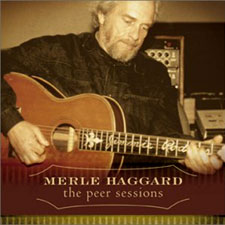
This is Merle at his smoothest and most effortlessly nuanced, paying homage to the fathers and titans of country's heritage and backed flawlessly by, as usual, some of the hands-down best in the business. Old friends, longtime and sometime Strangers (you do know the Strangers are Merle's band, have been from the get-go, right?) pepper the credits. There's Biff Adam on the drum kit, Abe Manuel Jr. filling in on accordion, harmonica and even vocals here and there. Norman Hamlet on the dobro and steel sounds as good now as he ever did, and Redd Volkaert managed to find himself an electric guitar a time or three before the dust all settled. Oleg Schramm on the piano would usually amount to 'nuff said, but the ivories on the Tommy Duncan's "Time Changes Everything," the final track, get tickled by the great Owen Bradley - - the track was laid down just fifteen months before his death in 1998. We could keep on rolling through the all-star supporting cast here, but fact is it'd be like reading those genealogies in Deuteronomy. Just slide your eyes through the liner notes while you listen to your copy and you'll find someone you've loved to listen to for years. And production? Well. Merle and Roy handled that task themselves on all but "Hang On To The Memories," a song covered in duet fashion by Merle and author Jimmie Davis. Davis took Horton's place alongside Hag at the boards for that track. And by and large the studio work was done in two of the best places country music's ever happened: Merle's own Tally Studios in his home state of California, and the Bradley's Barn studio in Nashville itsownself. So what are we looking at here, exactly? It's established now who's playing and engineering, and the pedigree is above reproach. It's time to discuss content, plain and simple. And plain and simple it is, in all the soul-cleansing ways that Music Row has forgotten. How about Jimmie Rodgers, the father of country music? Yep, he's in here. "Peach Pickin' Time In Georgia" leads off. His seminal "Anniversary Blue Yodel" gets a faithful rendering as well. Bonnie Dodd gets a nod, and some of Western swing's slowest and prettiest work ever is on display with the W. Lee O'Daniel track "Put Me In Your Pocket." Fort Worth never sounded so good on a Bakersfield singer's whiskey voice. Perhaps as a tip of the hat to the days when an artist could write and make good music in any genre he chose, Merle put Bill Halley's "Miss the Mississippi and You" at number seven on The Peer Sessions. The combination of Katherine Styron's lounge piano, Don Markham's mournful sax and rippling guitar work from Volkaert and Joe Manuel is intoxicating in a far beyond legal manner. And then it's right back into country of the stone cold variety, with the Jimmie Davis/Floyd Tillman composition "It Makes No Difference Now." I learned to love you and The defiance of the rural way when caught in adversity's gaze was one of the things Jimmie Rodgers voiced the best, and his thrashing of his lifelong nemesis tuberculosis in "Whipping That Old T.B." gets a significant reading as the ninth track on this disc. George Strait's legions of young fans should spend some quality time with the next cut, Jimmie Davis' "Hang On to the Memories." This was the kind of music Strait was hearing when he wrote "Amarillo by Morning," and to listen to his new stuff, maybe Strait should dig out the Rodgers library as well. As noted above, Davis duets with Merle on this track, and it's a sweet, sweet tragedy that the song doesn't last for a year or two longer than the three minutes and six seconds it takes it to leave the station. Floyd Tillman's "I Love You So Much It Hurts" is a masterpiece, always has been. This version ranks with the original. But no matter how much love hurts, it's true, "Time Changes Everything," and that's how The Peer Sessions closes out. Tommy Duncan's vision of Western swing was one of the truest ever, and it's fitting that an album of this caliber closes out in this manner. You can change the name of an old song Written to a woman, recorded again after all these years by one
of our kind of music's greatest, and heard through ears admittedly
jaded and cynical, this final track and the lyrics above play like a
damning reproach to the atrocity country music has become. It is to
Merle Haggard's credit, both as an artist and as a man, that he is
able to so eloquently showcase all that is wrong with the genre
today simply by playing to perfection so much of what was right
about its past. The album is called The Peer Sessions because
Roy Horton's Peer-Southern Productions was intimately involved with
the work. It could just as easily be titled so because Merle
Haggard, in this arena and surrounded by lifelong friends on their
best instruments, is, simply, among peers when he sings the songs
found here. Somewhere Jimmy and Hank and Johnny are smiling, and
when Merle goes to sit in with them, it won't bother me much if I'm
not far behind. Contact David Pilot at: tailgunner@rockzilla.net |
||
 Read Rockzilla's Guestbook Sign Rockzilla's Guestbook |
|
|
||
|
 |
|
|
| The opinions expressed by individual columnists do not necessarily reflect the opinions of Rockzillaworld. All content ©2002 Rockzillaworld. All rights reserved. No part of this site may be reproduced or copied without the permission of the site owner. This includes html code. |